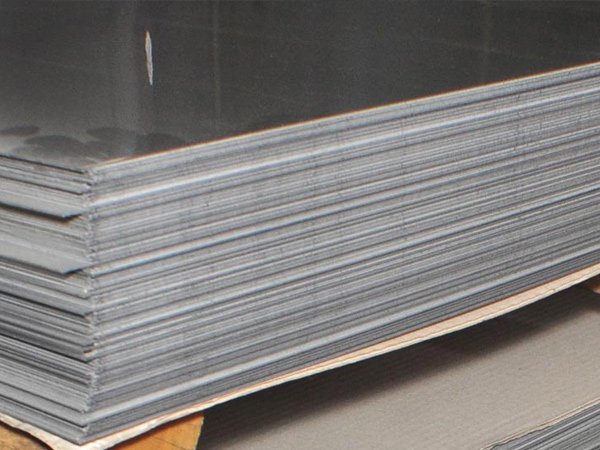
Alloys 309 and 309S are austenitic chromium-nickel stainless steels that are often used for higher temperature applications. Due to their high chromium and nickel content, Alloys 309 and 309S are highly corrosion resistant, have outstanding resistance to oxidation, and excellent heat resistance while providing good strength at room and elevated temperatures. The only significant difference between 309 and 309S is the carbon content. Alloy 309S has a much less carbon composition which minimizes carbide precipitation and improves weldability.
Alloys 309 and 309S are used exclusively for their high temperature oxidation resistance, excellent high temperature strength, along with their resistance to creep deformation and environmental attack.
| Standard | : | ASTM A240 / ASME SA240 |
| Thickness of Coils | : | Ranging from 0.3mm to 10mm |
| Thickness of Sheets (Cold Rolled) | : | Ranging from 0.3 mm to 6 mm |
| Thickness of Sheets / Plates (Hot Rolled) | : | Ranging from 3.0 mm to 20 mm |
| Width | : | 1000mm / 1219mm /1250mm / 1500mm / 2000mm |
| Length | : | 2000 mm / 2440 mm / 2500 mm / 3000 mm / 6000 mm | Hardness | : | As per ASME A & NACE MR 175 |
| Finish | : | Hot rolled plate (HR), Cold rolled sheet (CR), 2B, 2D, BA NO(8), SATIN (Met with Plastic Coated) |
| Form | : | Coils, Foils, Rolls, Plain Sheet, Shim Sheet, Perforated Sheet, Chequered Plate, Strip, Flats, Blank (Circle), Ring (Flange) etc. |
| C | Mn | Si | P | S | Cr | Ni | Fe | |
|---|---|---|---|---|---|---|---|---|
| 309 | max: 0.20 | 2.0 max | 0.75 max | 0.045 max | 0.03 max | min: 22.0 max: 24.0 | min: 12.0 max: 15.0 | Balance |
| 309H | min: 0.04 max: 0.10 | 2.0 max | 0.75 max | 0.045 max | 0.03 max | min: 22.0 max: 24.0 | min: 12.0 max: 15.0 | Balance |
| Grade | Tensile Strength ksi (min) | Yield Strength 0.2% ksi (min) | Elongation % | Hardness (Brinell) MAX |
|---|---|---|---|---|
| 309/H | 40 | 30 | 40 | 217 |
| Density lbm/in3 |
Thermal Conductivity (BTU/h ft. °F) |
Electrical Resistivity (in x 10-6) |
Modulus of Elasticity (psi x 106 |
Coefficient of Thermal Expansion (in/in)/ °F x 10-6 |
Specific Heat (BTU/lb/ °F) |
Melting Range (°F) |
|---|---|---|---|---|---|---|
| at 68°F: 0.285 | 9.0 at 32- 212°F | 30.7 at 68°F | 28.5 | 8.28 at 32 – 212°F | 0.1200 at 68°F to 212°F | 2500-2590 |